Explain components in the SARS-CoV-2 Antigen Self Test Nasal/
Number of entries: 15/
Method: Manual extraction/
References: WIPO PEARL, TERMDAT, Medical Terminology Database/
Next step: Definition Approval/
Antigen self test nasal
noun
A diagnostic test to detect the presence of antigens in the body, the substances that cause the body to produce an immune response. In this antigen self test, patient takes sample of fluids and mucus from the nose using the nasal swab enclosed.
Example: The TGA's performance requirements for COVID-19 rapid antigen self-tests are internationally aligned with technical specifications published by the World Health Organisation (WHO) and the European Commission. This includes a clinical sensitivity of at least 80% (for specimens collected within 7 days of symptom onset) and a clinical specificity of at least 98%.
ja: 抗原検査
Circular well
Noun
A circular well is a circular area on the test device where specimen or sample of nasal secretion, fluid or tissue mixed with extraction buffer is dropped onto.
ja: サンプル穴
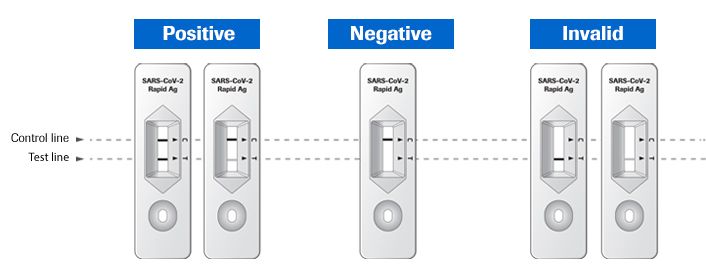
Control line
noun
A control line is a colored band appeared in the result window where the letter 'C' (Control) is marked, to indicate that the test is working properly. However faint or inconsistent the control line seems to appear, the test is evaluated to be working properly. No appearance of a control line means the test is invalid and has to be repeated.
Example: Test results were read after 10 min by visual inspection for staining of the antigen and control lines. Tests were scored negative when no staining was observed at the test line and scored positive when the test line stains. The control line should stain in all cases.
ja: コントロールライン
Desiccant package
noun
A desiccant package is a package containing substances or chemicals that absorb or attract moisture in the air. A desiccant package inside the foil pouch keep the air inside the pouch dry and moisture free, and protects the test device from moisture-related damages.
ja: 肝臓材パッケージ
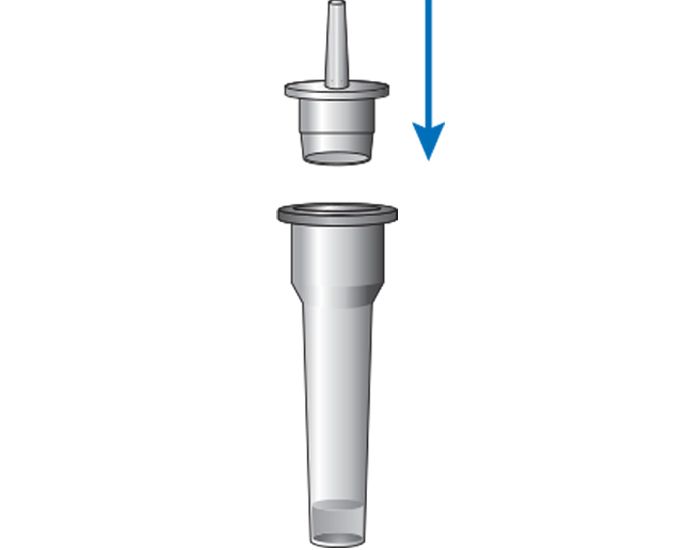
Extraction buffer tube
Noun
Extraction buffer tube is a tube included in the antigen self test containing an extraction buffer, a solution used for breaking open cells for tests that analyze the compounds of the cells.
ja: エキストラクションバッファーチューブ
Foil pouch
noun
A package made from laminating together several layers of different materials. A foil pouch in the antigen self test kit contains the device for testing.
ja: アルミパウチ
HBSS (Hank's balanced salt solution)
noun
For the isolation of kidney tubule epithelial cells, C57BL/6 mice (4-weeks old) were anesthetized and sacrificed. Kidneys were immediately removed and placed in ice-cold HBSS. The renal cortices were dissected visually and sliced into pieces of 1 mm in width, and transferred into 10 mL HBSS containing collagenase IV for each kidney.
Example: For the isolation of kidney tubule epithelial cells, C57BL/6 mice (4-weeks old) were anesthetized and sacrificed. Kidneys were immediately removed and placed in ice-cold HBSS. The renal cortices were dissected visually and sliced into pieces of 1 mm in width, and transferred into 10 mL HBSS containing collagenase IV for each kidney.
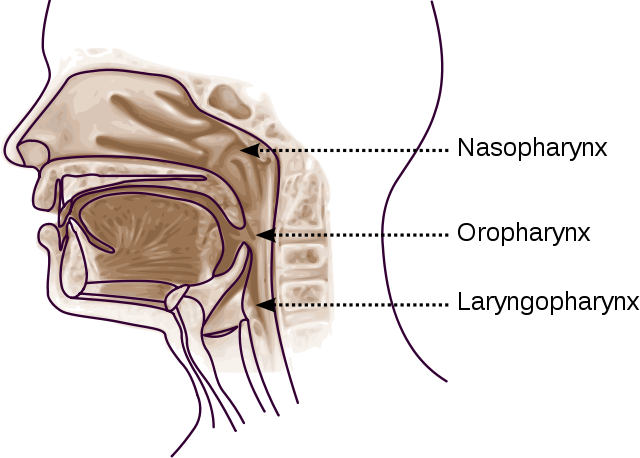
Nasopharyngeal surface
Noun
The nasopharynx is located in the space between the back of the nose and soft palate. It is continuous with the nasal cavity and forms the upper part of the respiratory system. In the antigen test, the nasopharyngeal surface is the surface the swab must reach in order to obtain samples to perform the test.
ja: 鼻咽頭表面
Nasopharyngeal swab
noun
A nasopharyngeal swab is a device used for collecting a sample of nasal secretions from the back of the nose and throat.
Example: A molecular test using a nasal swab is usually the best option, because it will have fewer false negative results than other diagnostic tests or samples from throat swabs or saliva. People who are in the hospital, though, may have other types of samples taken.
ja: 鼻咽頭スワブ
Nozzle cap
noun
A nozzle cap is the cap used to seal the extraction buffer tube securely and direct the solution inside the tube onto the circular well.
ja: ノズルキャップ
NP/OP sample
Noun
a NP/OP sample is a sample of fluids, secretions or tissues taken from the nasopharyngeal (NP) surface - the upper part of the throat behind the nose and oropharyngeal (OP) surface - the lower part of the throat at the back of the mouth.
Example: First, OP swabs revealed significantly more positive results (34/235 positive, 14.5%) than NP swabs (14/235, 6.0%) for detection of S. pneumoniae by qPCR, P < .001. Secondly, for detection of B. pertussis serology exhibited significantly more positive results (13/256, 5.1%) than real-time PCR, in both NP and OP swabs (both 0/256, 0.0%) P = .001. Similar results were recorded for detection of influenza viruses by serology (34/236, 14.4%) compared to real-time PCR in NP swabs (15/236, 6.4%) P < .001; and serology (34/235, 14.5%) compared to real-time PCR in OP swabs (15/235, 6.4%) P < .001.
Specimen well
Noun
A specimen well is a circular area on the test device where specimen or sample of nasal secretion, fluid or tissue mixed with extraction buffer is dropped onto.
Example: Dispense 3 (full) drops (approx. 100ul) into each specimen well (2), start the timer and wait for the colored lines to appear. Read result between 5 to 10 minutes after the addition of sample. Do not read after 10 minutes. Please note: the picture below shows a multi-panel cassette.
ja: サンプル穴
Test device
noun
A rectangular device packed in the foil pouch with desiccant, which shows on its body a result window where a positive or negative test result is presented, and a circular well where sample is dropped onto.
ja: テスト装置
Test line
noun
A test line is a coloured line appeared in the result window where the letter 'T' (Test) is marked. The appearance of a test line, however faint or consistent, in addition to the presence of a control line, indicates a positive test result.
Example: The test line was manufactured by spraying Brucella-LPS antigen onto the nitrocellulose strip and the control line by spraying bovine immunoglobulin G (IgG) antibodies.
ja: テストライン
Viral transport medium (VTM)
noun
A viral transport medium is a solution used to preserve virus samples after collection to be transported and analyzed at a later time.
Example: Three types of respiratory specimens (nasal swabs, throat swabs, and nasopharyngeal aspirates) were collected on admission by trained personnel using standard operating procedures, and were placed in viral transport medium